Musical Instruments of Paniya Community
Dr.K.Umaraj
5/21/20263 min read

Musical Instruments of Paniya Community
Craftsmanship: The Indigenous Knowledge of Instrument Making
The process of creating the ‘thudi’ and ‘kuzhal’(ci:nam) is a vital form of cultural transmission, mirroring the detailed, seasonal, and knowledge-intensive process. The ‘thudi’ and ‘kuzhal’ (ci:nam) are the pillars of Paniya music. Their creation is an act of indigenous knowledge, where understanding materials is paramount.
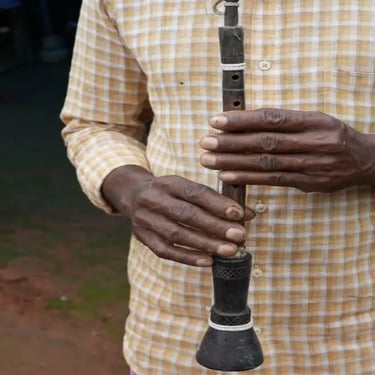
Kuzhal (ci:nam)
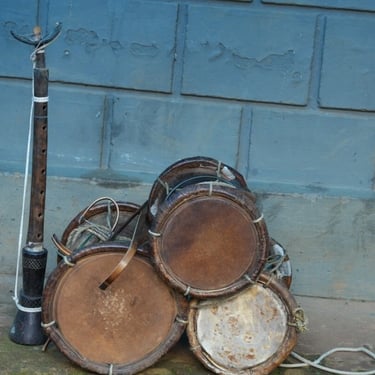
The ‘kuzhal’ is a long bamboo pipe, a wind instrument whose significance transcends its function. It is believed to be a divine gift, and its sound is considered the "sound of God." The ‘kuzhal’ thus possesses a profound "social life" (Bates, 2012), governed by strict protocols:
Ritual Purity: Women during menstruation are forbidden from touching the ‘kuzhal’, reflecting beliefs about sacredness and pollution. Any violation requires purification rituals.
Sacred Storage: It is stored in a designated sacred space within the home, often on the roof.
Ancestral Summons: The initial playing, or ‘kuzhalvili’, by the family head is believed to summon ancestral spirits, creating a bridge between the living and the spiritual realm. This is analogous to the way music for the Paniyas is not just performance but a medium for connecting with divine commandments and community history.
Thudi
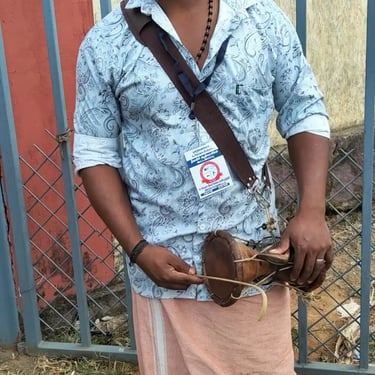
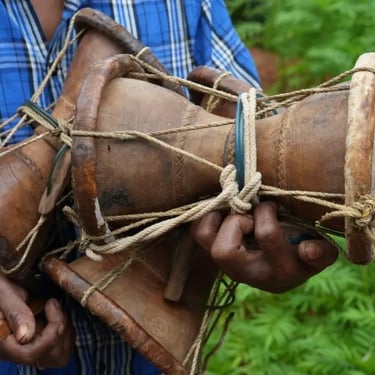
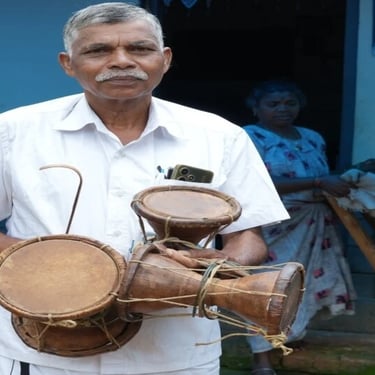
The ‘thudi’ is an hourglass-shaped drum made from hollowed jackfruit or banyan wood and animal skin. Its historical depth is remarkable, with detailed descriptions in ancient Tamil Sangam literature (c. 300 BCE - 300 CE), attesting to an enduring legacy of over two millennia. This historical documentation provides a unique opportunity for analytical organology, tracing the instrument's consistent cultural role.
Kurunthogai (261): Notes its powerful sound, suitable for ceremonies and war, indicating its role in mobilizing communal energy.
Agananuru (312): Describes a string for sound modulation, showcasing an early, sophisticated understanding of acoustics.
Porunararruppadai (125): Compares its face to an elephant's legs, symbolizing its imposing, majestic presence.
Perumpanarruppadai (124): Mentions it being hung at the front of houses with arrows, symbolizing readiness and marking a Paniya dwelling. The ‘thudi’ is a unifying symbol and the rhythmic heartbeat of the Paniya.
Material Sourcing and Preparation
The Paniya’s organic connection to their environment is evident in their material selection. They use specific woods (jackfruit, banyan) and skins (goat, monkey, Forest Giant squirrel) sourced sustainably from their surroundings. The knowledge of which materials produce the best sound is a treasured indigenous science.
The Construction Process
While the detailed steps for the ‘kuzhal’ (ci:nam) and ‘thudi’ are part of an oral tradition, the general process involves meticulous handcrafting. For the ‘thudi’, hollowing the wood, treating the skin, and stretching it over the drum body requires skill passed down through generations. The Paniya craftsman’s ability to create an instrument that has remained structurally and functionally consistent for centuries is a testament to the efficacy of this traditional knowledge.
Dance and Music
The synergy between the ‘thudi’ and ‘kuzhal’ (ci:nam) creates a holistic performance that is central to Paniya life. The performance context is where the "interrelationship between instrument, performer, and sound object" (Johnson, 1995) becomes vividly apparent. The ‘kuzhalvili’ initiates the event, its melodic call establishing a sacred space. In response, the men take up their ‘thudi’ drums, creating a complex, synchronized rhythm that forms the event's pulsating heart. This rhythmic foundation prompts the women and children to form dancing circles or lines. The dance is a communal ritual, fostering unity and expressing shared heritage. The music a blend of the ‘kuzhal's’ (ci:nam) ethereal melody and the ‘thudi's’ driving rhythm creates an immersive atmosphere that can induce states of heightened spiritual awareness or trance, facilitating a direct connection with the ancestral realm.
Cultural Significance and Preservation Challenges
The dance and music of the Paniya serve multiple, interlocking functions crucial for their cultural survival, a finding consistent with ethnomusicological studies globally. Cultural Transmission in a community with an oral tradition, songs and dances are the primary vehicles for passing down history, ethics, and ecological knowledge. Social Cohesion Performances are powerful social institutions that reinforce group identity and foster a sense of unity, much like the symbiotic relationship between the Paniyas and other tribal communities in Nilgiris and Wayanad. Spiritual Connections between the ‘kuzhal’ (ci:nam) and ‘thudi’ facilitate a dialogue with the divine and the ancestral, ensuring spiritual well-being. Emotional expressions from arts provide a culturally sanctioned outlet for a full spectrum of emotions, from joy to profound grief. However, the Paniya community faces significant challenges. While the Paniyas have adapted by playing traditional tunes on new instruments, the deeper threat is the erosion of traditional knowledge among the youth due to migration, economic pressures, and the influence of mainstream culture. The meticulous process of making a ‘thudi’ or understanding the sacred protocols of the ‘kuzhal’(ci:nam) risks being lost.
Musical Instruments